Conceptual Range
Generate different underlying product ideas, not the same screen in three skins.
The first plausible answer is useful. The problem starts when it becomes the only model you explore.
Three polished screens can still be one idea repeated with different styling. Conceptual range changes the product assumption, the user's behavior, or the shape of the interaction.
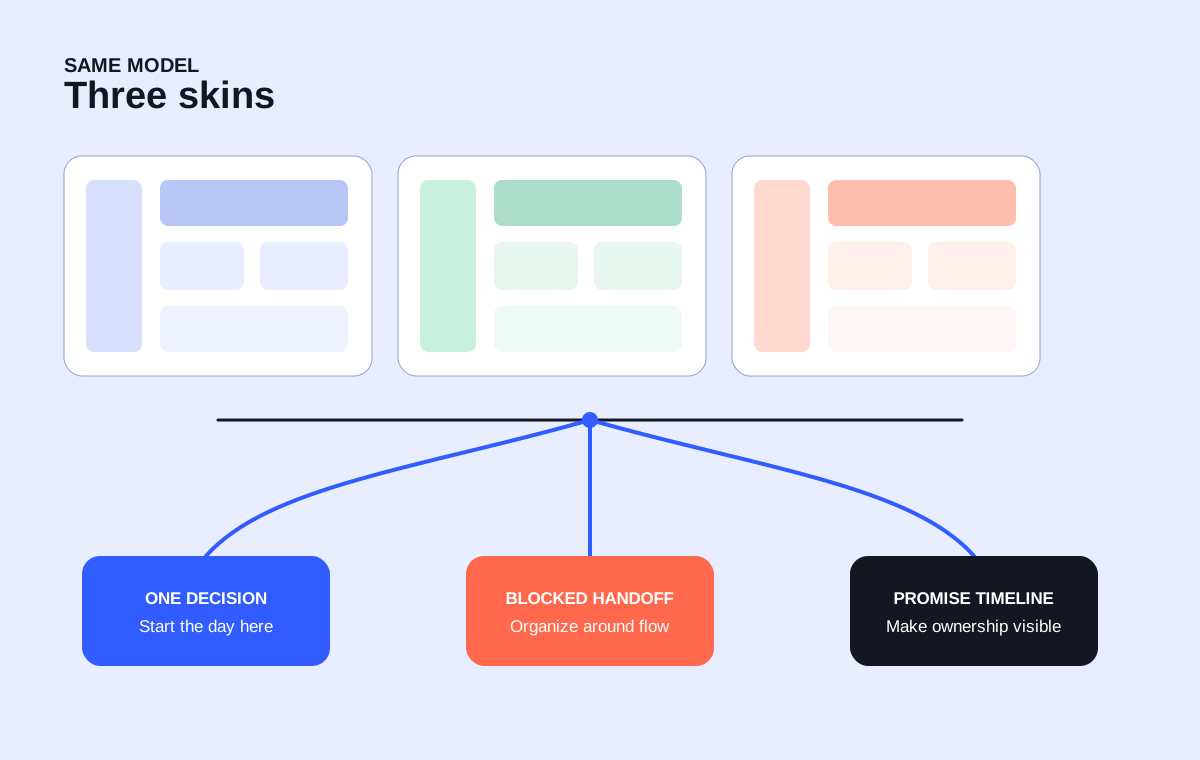
Notice the repeated idea
Imagine the brief says: “Design a dashboard for a project-management tool.” A first pass produces a sidebar, metric cards, and a table. Two more passes change the density and color, but keep the same model: people monitor projects from a dashboard.
That is more output. It is not more range.
Generate from assumptions
Before asking for another screen, list the assumptions inside the first answer. Then change one assumption at a time.
- What if the day starts with one decision instead of an overview?
- What if work is organized around blocked handoffs instead of projects?
- What if the interface is a timeline of promises to other people?
Ask AI to develop the consequences of each model. Keep the brief and evidence fixed so the difference comes from the idea, not random novelty.
Use it now
Generate from a different assumption
Copy this prompt, add your brief and evidence, then use it in an AI tool you already work with.
Use the product brief and evidence I provide. First, state the default assumption the current direction makes about the user, the work, or the product. Then propose three different product directions by replacing one meaningful assumption at a time. For each direction, describe the resulting user behavior, product model, main trade-off, and what evidence would need to be true. Keep the brief and evidence fixed. Do not choose a winner for me.What to changeAdd your product brief, relevant research, and the current direction before the prompt.
What to keepThree directions with visibly different assumptions, plus the evidence each one depends on.
Create three directions
Take one current product brief. Write the default product assumption, then invert or replace it three times. Ask AI for one direction based on each assumption. Label the assumption above every result.
Test bench
Test whether the directions create real range
Run the same brief and evidence through three assumption changes. Paste each result, record visible evidence, and keep the revisions—not an unexplained score.
A project-management dashboard brief with its current evidence and default assumption held constant.
Entries stay in this view. DSGNEDGE does not send this work to an AI provider.
Which direction changes the underlying idea in a way the brief and evidence can support?
Inspect the user behavior, the product assumption, the trade-offs, and what would need to be true for each direction to work. Keep the choice yourself.
Keep the method
Save four lines: the original assumption, the three alternatives, the direction you chose, and the evidence behind the choice. That is useful on the next project. The generation transcript is not.